In this article
- We love talking about ourselves (and our brains reward it)
- The Barnum effect: "Wow, this is so me"
- Self-verification: we like being confirmed
- Identity and belonging: finding your team
- Sharing is half the fun
- The BuzzFeed era: when quizzes took over the feed
- Are personality quizzes "bad" for you?
- Why we'll keep clicking
It's 11:48 p.m. You have work tomorrow. You also now know which bread you are (sourdough: complex, a little sour, worth the wait), which season matches your soul and which supporting character from a show you've never watched you'd be. You have no regrets.
Personality quizzes are one of the internet's most reliable pleasures. They've been around far longer than the internet, too: magazines ran "what kind of friend are you?" quizzes for decades before anyone clicked a button. And no matter how many times people roll their eyes at them, we keep taking them.
As a site that literally makes quizzes, we've thought about this a lot. Here's what psychology says about why they're so hard to resist, and why that's mostly a good thing.
We love talking about ourselves (and our brains reward it)
Start with the simplest reason: a quiz is a conversation where the topic is you.
In 2012, Harvard researchers Diana Tamir and Jason Mitchell published a study showing that talking about yourself activates brain areas linked to reward, the same general system involved in enjoying food or money. In one part of the study, participants even gave up small amounts of money for the chance to answer questions about themselves instead of about other people.
A personality quiz is basically that experiment in a cute font. Every question asks you to think about your preferences, habits and quirks. Then it hands you a result that's all about you. It would be strange if we didn't enjoy that.
The Barnum effect: "Wow, this is so me"
In 1948, psychologist Bertram Forer gave his students a personality test and then handed each of them a "personalized" description of their results. Students rated how accurate it was, and on average they rated it very highly. The twist: everyone got the exact same text. Forer had assembled much of it from statements in an astrology book.
Lines like these did the work:
- "You have a great deal of unused capacity which you have not turned to your advantage."
- "At times you are extroverted, affable, sociable, while at other times you are introverted, wary, reserved."
- "You prefer a certain amount of change and variety and become dissatisfied when hemmed in by restrictions and limitations."
Read those and try not to feel seen. They're vague enough to fit almost anyone, flattering enough to accept and specific-sounding enough to feel personal. Psychologist Paul Meehl later nicknamed this the Barnum effect, after showman P. T. Barnum, whose circus supposedly had a little something for everyone. You'll also hear it called the Forer effect.
Every horoscope, aura reading and quiz result taps into this a bit. That's not a scandal. It's just useful to know that the "this is SO me" feeling is partly about the writing, not only about you.
Self-verification: we like being confirmed
Here's a less famous but just as important idea. Psychologist William Swann developed self-verification theory in the 1980s. The core claim: people want others to see them the way they see themselves, even when that view isn't entirely flattering.
That explains something odd about quizzes. People don't just want a nice result. They want the right result. If you think of yourself as a chaotic, funny, slightly disorganized person and the quiz calls you "calm and meticulous," you don't feel complimented. You feel misread, and you might retake it until it gets you right.
When a quiz does match your self-image, it gives a small, satisfying "yes, exactly." It confirms the story you already tell about yourself, which feels stabilizing, especially in times when you're figuring out who you are. That's partly why teens and twenty-somethings are such enthusiastic quiz-takers. Identity is under construction, and every result is a possible piece.
Identity and belonging: finding your team
A quiz result isn't just a label. It's a membership card.
Social psychologist Henri Tajfel's work on social identity showed how quickly people attach to groups, even groups assigned on trivial grounds. Being sorted into a Hogwarts house, a zodiac sign, an aura color or a four-letter type gives you instant teammates. Suddenly you're one of the Ravenclaws, one of the Scorpios, one of the INFPs, and there's a whole internet of memes made for you.
That belonging also gives people language. "I'm a total introvert" or "that's my Virgo side" are quick ways to explain yourself without a long speech. Frameworks like the 16 personality types or zodiac signs as friends work partly because they hand you a shared vocabulary.
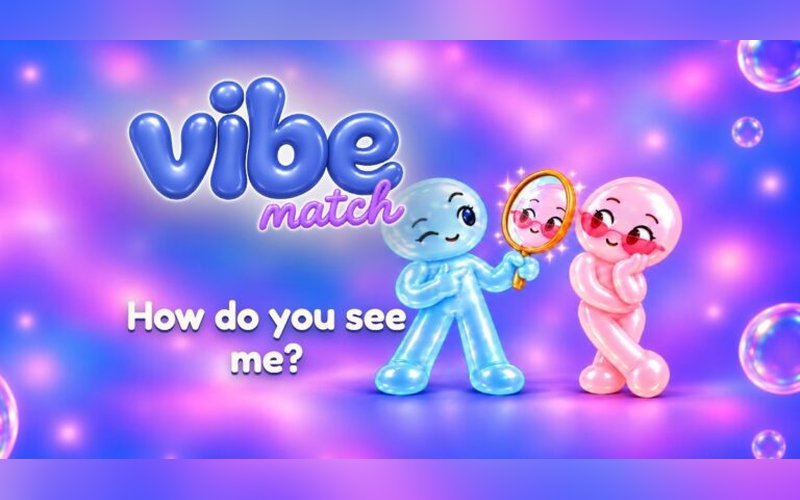 Take a break and playVibeMatchYou rate you. Your friends rate you. The gap is the fun part.Play now →
Sharing is half the fun
Have you ever taken a quiz and not wanted to tell someone the result? Probably rarely. Results are made to be posted, screenshotted and sent to the group chat with "LMAO accurate" or "this is slander."
Sharing does a few things at once:
- It's a conversation starter. "I got sourdough, what did you get?" is an easy, low-stakes way to talk.
- It's a mini self-introduction. Posting your result tells people something about you without the awkwardness of saying it directly.
- It invites comparison. Seeing your friends' results, and arguing about whether they're accurate, is often more fun than the quiz itself.
- It tests how well people know you. Friends love weighing in: "No way you're a 'calm planner,' you missed your own flight."
That last one is basically the whole idea behind our VibeMatch quiz, where you make a quiz about yourself and see which friends get your answers right. It turns the sharing part into the game.
The BuzzFeed era: when quizzes took over the feed
Personality quizzes have been a magazine staple for a long time, but around 2013 and 2014 they exploded online. BuzzFeed quizzes like "What City Should You Actually Live In?" spread across Facebook feeds at a scale that surprised even the people making them.
A few things lined up at once:
- Smartphones made it easy to take a quiz in a spare minute, on the bus or in a line.
- Social feeds rewarded anything people wanted to share, and quiz results were built for sharing.
- The formats were tiny and silly. Pick a sandwich, pick a sunset, pick a dog, find out your inner celebrity. The lower the stakes, the easier it was to click.
The silliness was a feature. Nobody believes which pasta shape they are reveals their deep nature. That's what makes it fun: you get the pleasure of self-reflection without any of the pressure.
Since then, quizzes have spread everywhere: aura tests, love language checks, "which K-pop group should you stan" quizzes, friendship tests. The packaging changes. The psychology stays the same.
Are personality quizzes "bad" for you?
Mostly, no. A few honest caveats:
- Fun quizzes aren't psychological tests. A quiz that tells you your aura color or your inner dessert is entertainment. Validated personality measures, like Big Five questionnaires used in research, are built and tested very differently.
- Don't let a label box you in. "The quiz says I'm not creative" is not a reason to stop drawing.
- Watch what you share. Some quizzes ask for things like your first pet's name or your birth city, which are also common security questions. Skip those.
Used lightly, quizzes can be genuinely useful. They prompt you to think about what you like, how you react and what you value. They give friends a reason to talk. And they're a small, harmless way to feel understood, which is something people need. If you're curious how one of the most popular quiz topics holds up under the microscope, our guide to what your favorite color says about you is a good example.
Why we'll keep clicking
Personality quizzes work because they hit several human needs at once. We like thinking about ourselves, we like being confirmed, we like belonging to a group and we like having something fun to share. The Barnum effect makes the results feel accurate, and social media makes them travel.
None of that means you're gullible for enjoying them. It means you're human. So go ahead and find out which bread you are. Just keep the result in perspective, send it to a friend and see if they agree. That's where the real fun starts.