
In this article
When the days get shorter in France, you start hearing one word everywhere: cocooning. Magazines run "spécial cocooning" issues, shops fill with soft throws and scented candles, and friends announce that this weekend they're staying in "en mode cocooning." It sounds like the most French thing imaginable, which is funny, because the word is English.
Cocooning is the art of wrapping yourself up at home when the weather turns, like a caterpillar in its cocoon. It's a blanket, a bowl of soup, a candle and a good film on a rainy Sunday. It's choosing comfort on purpose.
If you've heard of Danish hygge, you might think it's the same idea with a different accent. They're cousins, but they're not twins. Here's what cocooning really means, how it compares with hygge, and how to do it yourself this autumn.
Where the word comes from
"Cocooning" started in American English. The trend forecaster Faith Popcorn popularized it in the 1980s to describe people retreating into their homes as a refuge from a stressful outside world. In the US the word came and went with that era.
In France, though, it stuck around and took on a life of its own. Today French speakers use le cocooning as an everyday word, even turning it into a verb: se cocooner, to cocoon yourself. You'll see it on menus ("une soirée cocooning"), in spa ads, in home decor aisles, and in casual texts between friends.
The French meaning has also softened. It's less about hiding from the world and more about treating yourself gently: a soft, sensory, slightly indulgent kind of rest.
Cocooning vs. hygge
Hygge (roughly pronounced "hoo-ga") is the Danish idea of coziness and togetherness. It became an international trend around 2016, helped along by books like Meik Wiking's The Little Book of Hygge. Both concepts involve candles, blankets and warm drinks, so it's easy to blur them together. The differences are in the mood.
| Cocooning (France) | Hygge (Denmark) | |
|---|---|---|
| Core feeling | Comfort, softness, self-care | Togetherness, warmth, contentment |
| Typical company | Often solo or with a partner | Often with friends and family |
| Vibe | A little indulgent, a little sensual | Simple, unpretentious, equal |
| Classic scene | Bath, face mask, film, blanket, tisane | Candlelit dinner, board game, shared cake |
| Food | Soups, gratins, cheese, hot chocolate | Pastries, stews, coffee, mulled wine |
Put simply: hygge is a candlelit table with friends; cocooning is you, a plaid blanket and nobody asking you for anything. Both are lovely. Plenty of people do a bit of each.
The ingredients of a good cocoon
You don't need to buy anything special. Cocooning is mostly about arranging what you already have so your home feels soft and welcoming.
Soft, warm light
The French take on cozy lighting is low and golden. Turn off the ceiling light and switch on lamps instead. Add a few candles, string lights over a shelf, or even just the glow of the oven while something bakes. The goal is pools of light, not a bright, even room.
Textures you want to touch
A plaid (the French word for a throw blanket) is the symbol of cocooning. Add cushions, a chunky knit, thick socks, a fluffy robe. Mixing textures, like wool, linen, velvet and sheepskin, makes a space feel cozy even before you sit down.
A comforting smell
This is where cocooning gets very French. A scented candle, a pot of tea, an apple cake in the oven or a few drops of essential oil in a diffuser all count. Autumn favorites tend to be warm and spicy: vanilla, cinnamon, fig, woodsmoke, orange peel.
Something warm in your hands
A cup of tisane (herbal tea) in the evening, a thick hot chocolate on a Sunday afternoon, a matcha latte in the morning. The drink matters, but so does the mug. Holding something warm with both hands is half the pleasure.
Cocooning food
Autumn cocooning food is simple, warm and a little rich. Nothing fussy, mostly one-pot.
- Soupe de potiron: A velvety pumpkin or squash soup, maybe with a swirl of cream.
- Gratin dauphinois: Thin-sliced potatoes baked in cream and garlic until golden.
- Raclette or fondue: Technically social, but a very French way to spend a cold evening.
- Pot-au-feu or a slow stew: Leave it on the stove all afternoon and let the house smell amazing.
- Tarte aux pommes: A simple apple tart, or a crumble if pastry feels like too much.
- Chocolat chaud: Made with real chocolate, thick enough to coat the spoon.
- Homemade granola or cookies: For the next morning's breakfast or a lazy afternoon snack.
The point isn't to cook like a chef. It's the slow, warm process of making something nice for yourself.
 Take a break and playCozy ColorsA cozy coloring book that fits in your pocket.Play now →
Activities for a cocooning evening
A cocooning night has no agenda, but it helps to have a few gentle options within reach.
- A film marathon of old favorites, ideally ones you've seen enough times to half-doze through.
- A long bath with a book you don't need to concentrate on.
- A face mask and a hair mask, because why not.
- A jigsaw puzzle spread out on the coffee table.
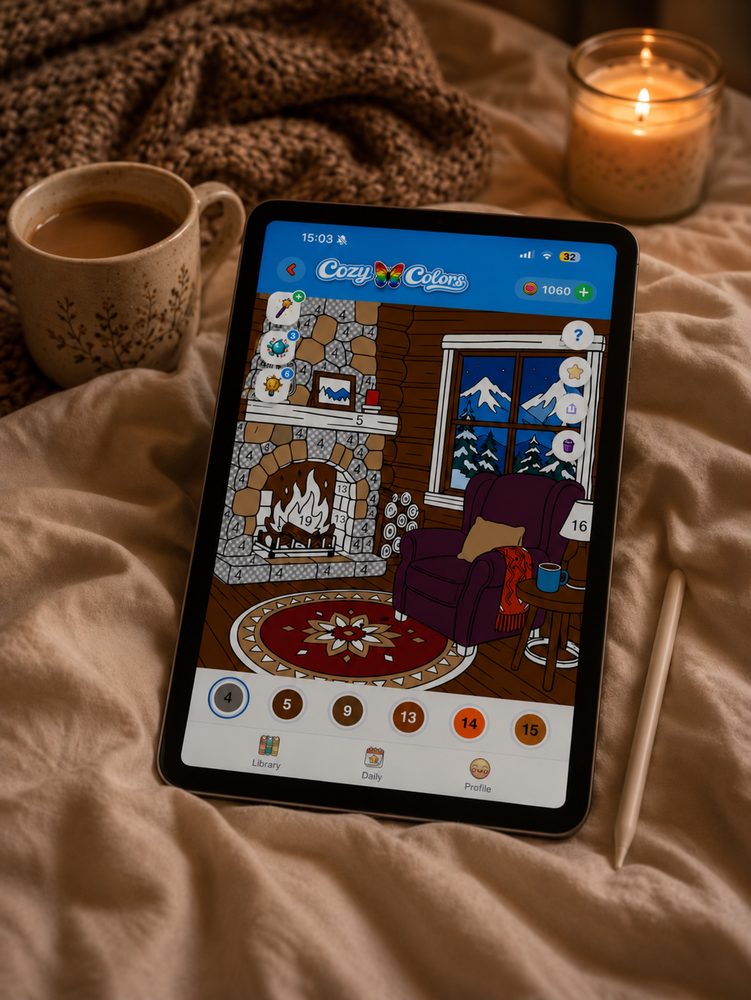
- Coloring, on paper or on a tablet in bed. Cozy Colors is our color-by-number app with hand-drawn cozy rooms, gardens and bakeries, which suits the mood perfectly.
- Journaling a few lines about the week: what was good, what was hard, what you're looking forward to.
- Baking cookies just to eat them warm.
- Watching the rain, honestly. A window seat and a storm outside is peak cocooning.
If you're curious why slow, hands-on activities like coloring feel so restful, we wrote about why coloring calms your brain.

How to cocoon without becoming a hermit
There's a fine line between a restorative weekend in and a whole month of avoiding everyone. Cocooning works best as a counterweight to a full life, not a replacement for it.
A few ways to keep it healthy:
- Plan it. A cocooning evening on Sunday feels like a treat. Canceling every plan for weeks feels different.
- Invite one person sometimes. Cocooning à deux, or with one close friend, mixes in the togetherness that hygge does so well.
- Get daylight. A short walk in the afternoon makes the evening on the couch feel earned and keeps your mood steadier as the days shorten.
If staying in starts to feel less like comfort and more like withdrawal, or autumn and winter bring a low mood that doesn't lift, that's worth talking to a doctor or someone you trust about. Seasonal dips are common, and you don't have to push through them alone.
A cocooning weekend, start to finish
Want to try it properly? Here's a gentle plan for a Saturday.
Morning: Sleep in. Make a slow breakfast of granola, yogurt and fruit, or pancakes if you're feeling ambitious. Drink your coffee or matcha by the window in your softest sweater.
Afternoon: Go for a walk to collect a few autumn leaves and buy something good from a bakery. Come home, put soup on the stove and start a puzzle.
Evening: Lamps on, candles lit, phone face down. Eat your soup on the couch under a plaid. Watch a film, color for a bit, or read until you get sleepy. Run a bath if you've got the energy.
Before bed: A tisane and a few lines in your journal. That's it. You've cocooned.
Your own cocoon
Cocooning isn't a style you have to buy into or an aesthetic you need to photograph. It's a permission slip to slow down when the season asks you to, and to make your home the softest place you know.
If you like the idea of building a whole cozy season, our guide to cozy fall activities has more ideas for the weeks ahead. For now, find your plaid, light a candle and let the rain do its thing outside.