In this article
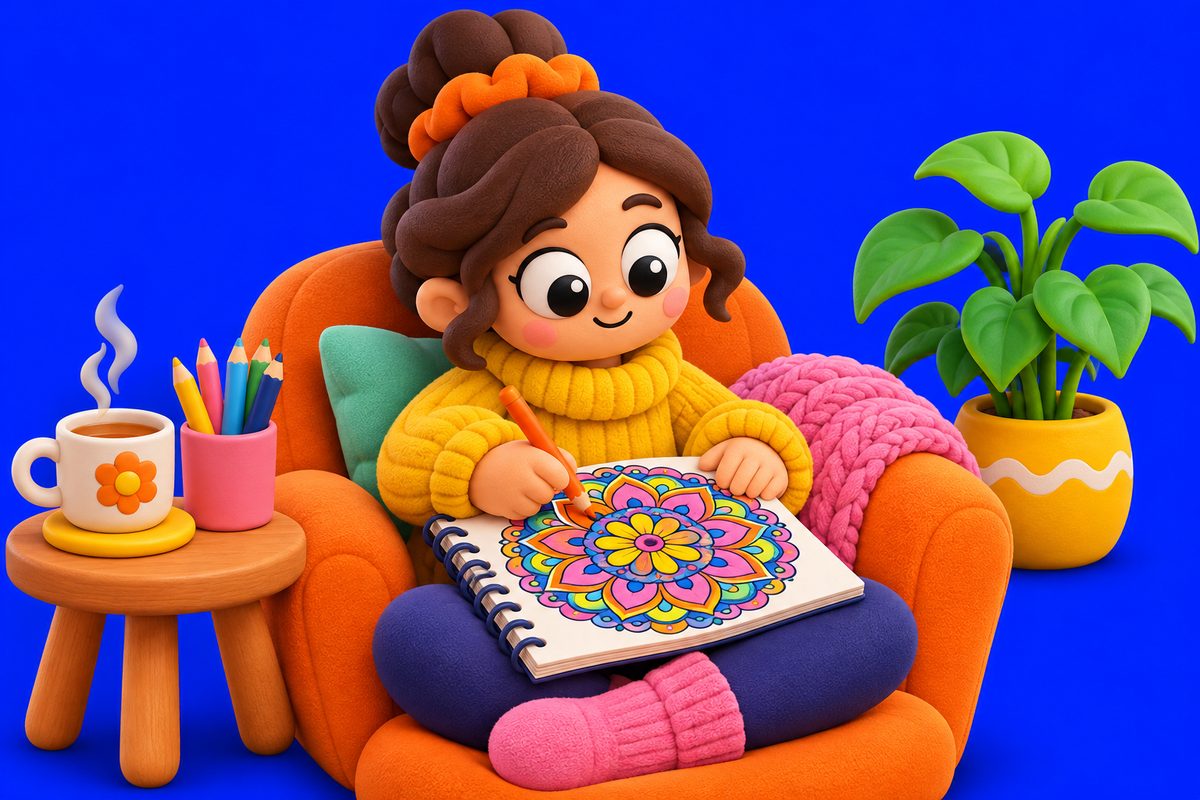
Around 2015, adult coloring books suddenly took over bestseller lists. Grown-ups were buying intricate mandalas, secret gardens and cheeky motivational quotes to fill in with gel pens. Some people found it silly. A lot more people found it weirdly, quietly calming.
That calm isn't imaginary. A small but real body of research has looked at what happens to people's stress and mood when they color, and the results are mostly encouraging. They're also more modest than the marketing on some coloring book covers would suggest.
Here's what the studies actually found, why coloring seems to settle a busy mind, what it can't do, and how to make the most of it, on paper or on your phone.
What the research says
The mandala study that started it all
The study most often cited is a short paper by Nancy Curry and Tim Kasser of Knox College, published in the journal Art Therapy in 2005. It began as Curry's undergraduate research project.
The design was simple. Eighty-four college students first went through a brief task meant to make them a bit anxious. Then they were randomly split into three groups for 20 minutes: one colored a mandala (a circular, symmetrical pattern), one colored a plaid design, and one got a blank sheet to color freely.
Students who colored the mandala showed a clear drop in self-reported anxiety, ending up below where they started. The plaid group dropped by roughly the same amount. The free-drawing group didn't. The authors suggested that a blank page might be a little stressful in itself, because you have to decide what to make.
A 2012 replication by Renée van der Vennet and Susan Serice found that mandala coloring reduced anxiety more than both plaid and free drawing. Not every follow-up has agreed, though: a 2018 study in Frontiers in Psychology found no extra anxiety benefit for unguided mandala coloring compared with free drawing. Small studies wobble, which is a good reason to hold any single result loosely.
Coloring every day for a week
A 2017 study from the University of Otago in New Zealand, led by Jayde Flett and published in the Creativity Research Journal, asked a bigger question: does a coloring habit help over several days?
About a hundred female university students were randomly assigned to color every day for a week or to do logic puzzles every day instead. The coloring group reported fewer depressive symptoms and less anxiety by the end of the week. The puzzle group didn't show that change. The researchers described coloring as a promising, cheap, easy self-help tool for people without a clinical diagnosis.
Art making and stress hormones
A 2016 pilot study at Drexel University, led by Girija Kaimal, measured cortisol, a hormone linked to stress, in the saliva of 39 adults before and after 45 minutes of making art with markers, clay or collage materials. Cortisol dropped for most participants, and prior art experience didn't matter. This wasn't a coloring study specifically and it had no control group, so it's best read as a hint rather than proof. Still, it fits the bigger picture: low-pressure creative activity seems to help many people relax.
Why coloring helps, in plain terms
Researchers don't have one neat explanation, but a few ideas show up again and again.
It gives your attention a small, friendly job
Anxiety loves an idle mind. When your thoughts have nothing to hold onto, they tend to drift toward worries and replay that awkward thing you said in 2019. Coloring gives your attention a task that's absorbing enough to crowd out rumination, but easy enough that it doesn't feel like work.
Structure removes decisions
The Curry and Kasser finding about free drawing points to something useful. A blank page asks you to invent, plan and judge. A coloring page has already made the hard choices. You only decide which color goes where, which is just enough choice to feel creative without the pressure.
Repetition is soothing
Small, repeated movements, like shading inside a line or tapping a numbered cell, have a rhythm to them. Many calming activities share that quality: knitting, kneading dough, raking leaves. The repetition can slow you down and give your body a steady pace to follow.
It can tip you into flow
Psychologist Mihaly Csikszentmihalyi described "flow" as the state where you're so absorbed in a task that time seems to disappear. Flow tends to show up when a challenge closely matches your skill level. Coloring hits that spot for a lot of people, especially with designs that are detailed but not frustrating.
You get visible progress
A worry rarely feels finished. A coloring page does. Watching blank areas fill in gives a small, steady sense of accomplishment, and finishing a page is a tiny win you can actually see.
What coloring can't do
It's worth being honest here, because overselling coloring doesn't help anyone.
- The studies are small. Most involve dozens of people, often university students, over short periods. That's a reasonable start, not the final word.
- Effects are short-term. Research mostly measures how people feel right after coloring or after a week. We don't know much about long-term benefits.
- It's not therapy. Coloring is sometimes used inside art therapy, but on its own it isn't treatment for anxiety disorders or depression. If worry or low mood is affecting your sleep, work, school or relationships, talking to a doctor, counselor or therapist is the right move.
- It isn't for everyone. Some people find coloring boring or fiddly, and that's fine. A walk, a puzzle or music might do the same job for you.
Think of coloring as a pleasant reset button, not a cure. It's great for winding down; it's not a replacement for real support when you need it.
 Take a break and playPixel ColorsFill the squares, watch the picture appear.Play now →
How to get the most out of coloring
A few simple habits make coloring feel more calming and less like another task.
Pick the right difficulty. Very tiny details can turn relaxing into frustrating. Very simple pages might not hold your attention. Start in the middle and adjust.
Choose structured designs when you're stressed. Based on that 2005 study, patterned designs like mandalas, grids or geometric shapes may suit an anxious day better than a blank page.
Limit your palette. Choosing among 120 pencils is its own decision fatigue. Pick five or six colors that work together before you start. If you're not sure which ones, our guide to color combinations that always work has palettes you can copy.
Set a gentle time box. Fifteen or twenty minutes is plenty. The original mandala study used 20.
Put the phone on silent, even if you color on your phone. Turn off notifications so the session doesn't get interrupted by messages.
Let go of "good." Nobody grades your coloring page. Going outside the lines is allowed, and so is a purple sky.
Pixel art and color-by-number count too
Coloring doesn't have to mean a paper book. Color-by-number and pixel-art styles have become hugely popular, especially on phones, and they lean even harder into the features that make coloring calming.
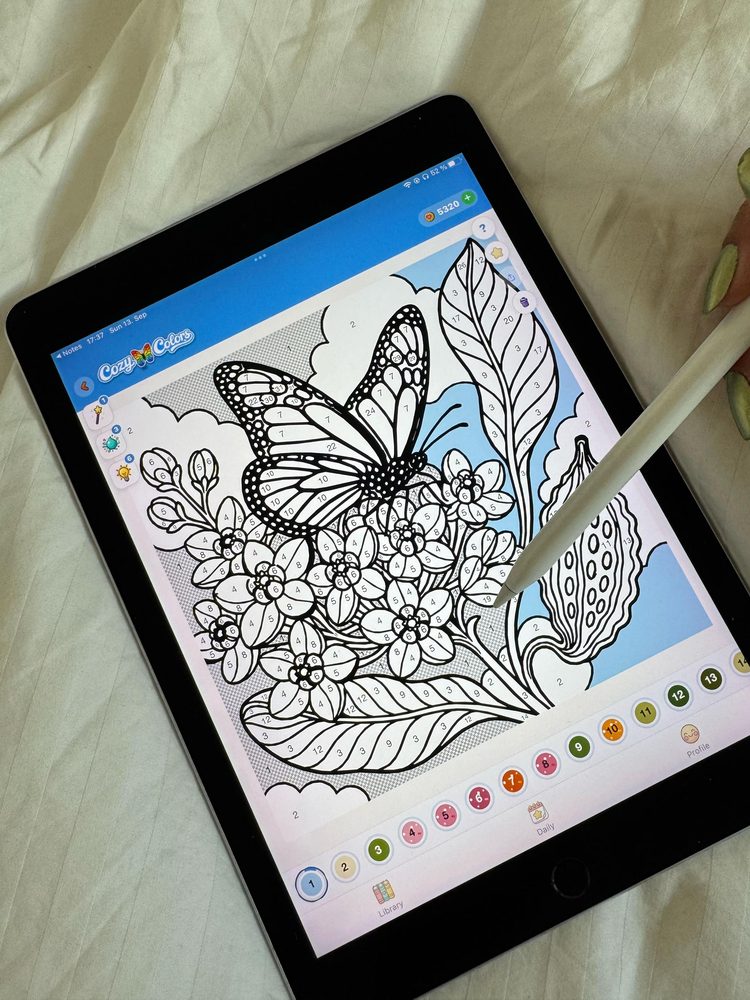
In color-by-number, every area already has a number matched to a color. There are zero decisions about what goes where, so all you do is follow the pattern and watch the picture appear. That makes it a strong choice for days when your brain is fried. Pixel-art coloring takes the same idea down to tiny squares, which adds a satisfying, almost puzzle-like rhythm as each cell snaps into place.
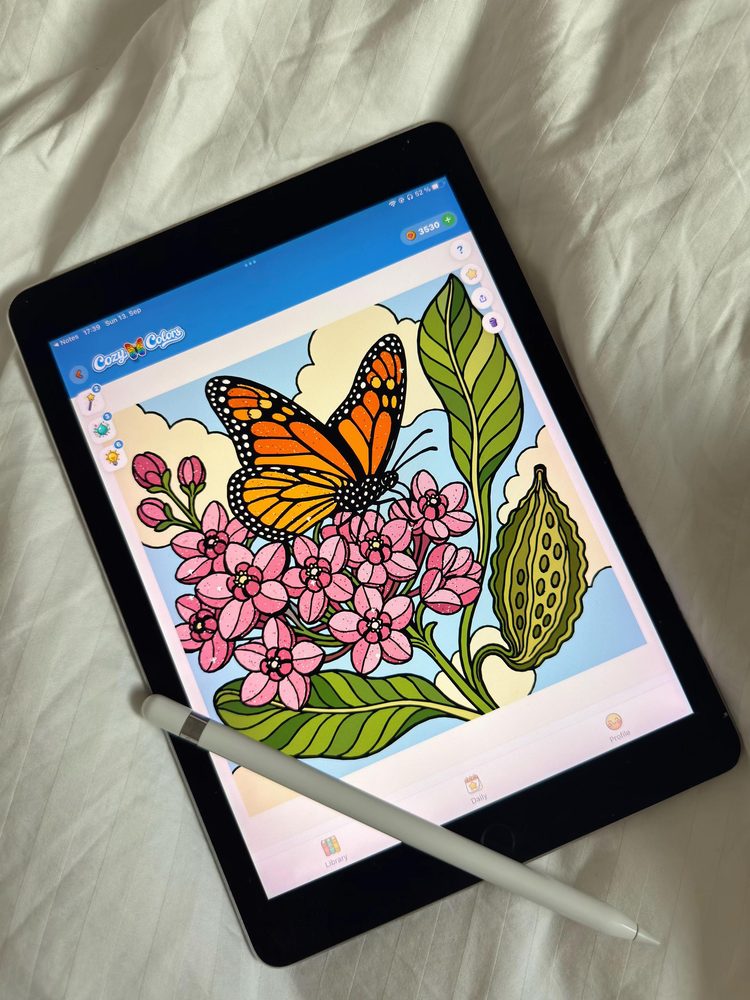
The trade-off is creative freedom: you're filling in someone else's color choices. Some people love that; others prefer a blank mandala and their own pencils. If you'd like to try the low-decision style, Cozy Colors does color by number and Pixel Colors does pixel art. Paper or screen, the same principles apply: steady focus, small repeated actions and visible progress.
Other ways to bring the same calm into your day
Coloring sits in a family of activities that soothe for similar reasons. If you like how it feels, you might also enjoy jigsaw puzzles, knitting or crochet, simple drawing exercises, tending plants or low-stakes games played with friends. Our stress-free game night ideas are built around keeping things relaxed rather than competitive.
Colors themselves carry plenty of personal meaning, too. If you've ever noticed you always reach for the same shade, you might enjoy reading about favorite colors and personality, as a fun reflection rather than hard science.
A small habit with a quiet payoff
Coloring won't solve your problems, and the research doesn't claim it will. What it can do is give your mind a short break from them: a gentle task, a bit of rhythm, and a finished picture at the end. For a lot of people, twenty minutes and a handful of colors is a surprisingly good way to get their breath back. Grab a page, pick your colors, and see how you feel when it's done.