In this article
Film never really went away, but it has definitely come back. Your friend has a little silver camera in her tote bag. Your feed is full of grainy, warm photos with a date stamp in the corner. Thrift stores that used to have bins of old cameras now keep them behind the counter.
The appeal is easy to understand. A phone gives you a thousand perfect photos you never look at again. Film gives you 36 shots, a wait of a few days and a little envelope of surprises. You slow down, you choose your moments and you can't check the screen. Somehow that makes the photos feel more like memories.
If you want to try it, the hardest part is choosing a camera. Prices are all over the place, some models are wildly overhyped and old electronics can fail. Here's a calm, honest guide to getting started.
Point-and-shoot or SLR?
Point-and-shoot cameras are compact, mostly automatic and made to go everywhere. You frame, press the button and the camera handles focus and exposure. Most have a built-in flash and motorized film winding. These are perfect for parties, trips and everyday life.
SLRs (single-lens reflex cameras) are bigger, with interchangeable lenses and manual controls. They teach you how exposure works and can produce stunning results, but they ask more of you.
Most beginners are happiest starting with a point-and-shoot. If you get hooked, an SLR is a natural next step.
The cameras worth knowing
These are the names you'll see again and again, with what they're actually like to own.
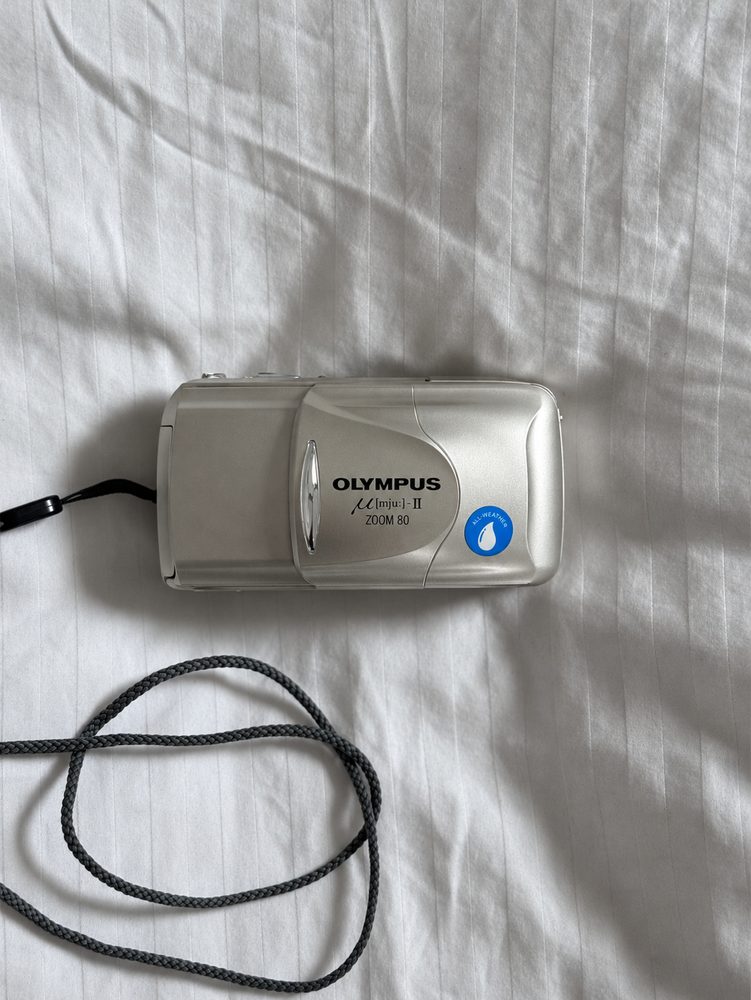
Olympus mju-II (Stylus Epic in the US)
The darling of the film revival. Released in 1997, it's tiny, rounded and weather-resistant, with a sharp 35mm f/2.8 lens and autofocus. The sliding front cover protects the lens and switches it on.
Good to know: the flash resets to automatic every time you close the camera, so if you hate flash, you'll be switching it off a lot. Its popularity has pushed prices far above what it cost a decade ago.
Olympus XA2
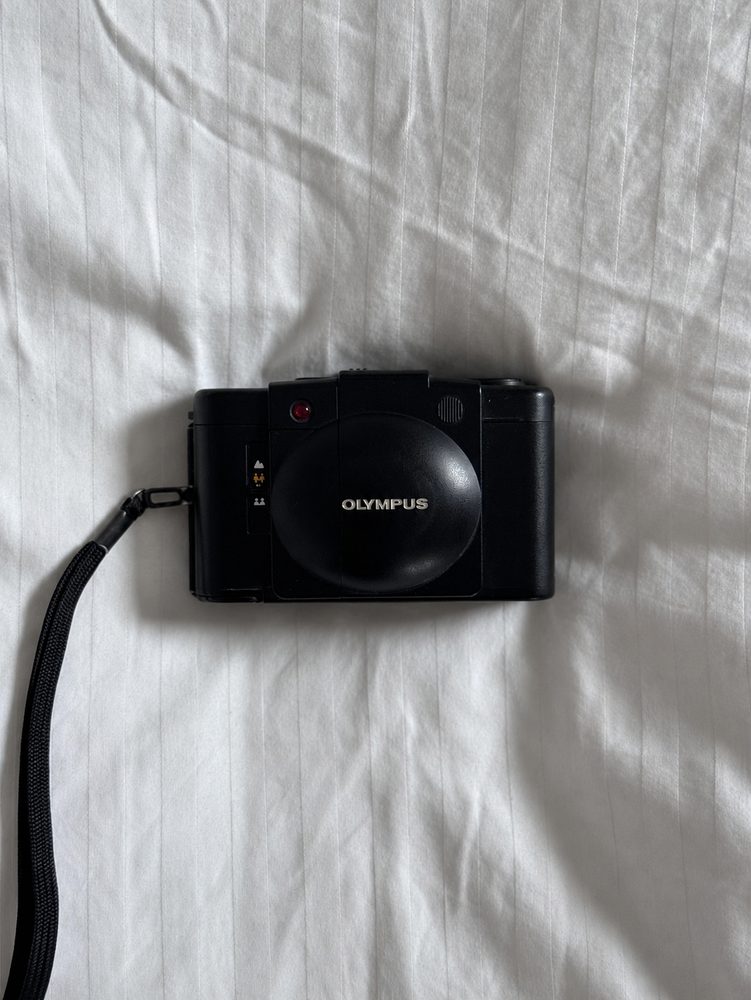
A small, clamshell camera from the early 1980s with a sliding cover and a soft, quiet shutter button. Focusing is simple "zone focus": you choose between close, medium and far with a little lever. Exposure is automatic.
It's charming, pocketable and usually cheaper than the mju-II. Some versions came with a detachable flash unit. Great for daylight and street photos.
Olympus OM-1 (an SLR)
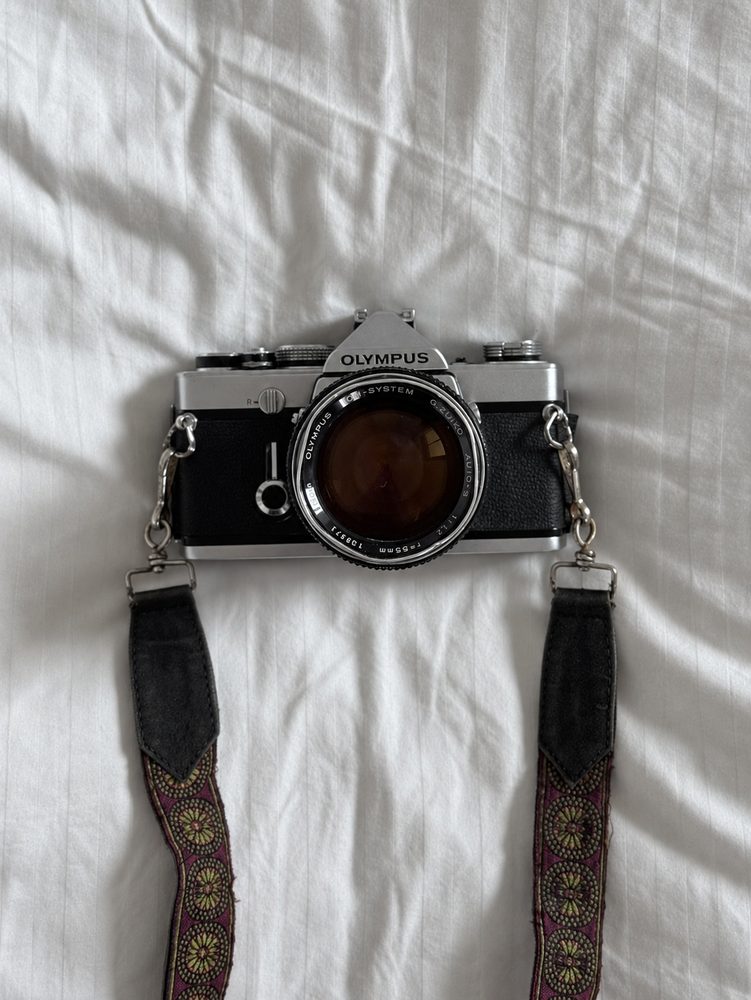
If you want to learn manual photography, the OM-1 is a beloved classic from the 1970s. It's compact for an SLR, beautifully made and has a mechanical shutter that works without a battery.
Good to know: the built-in light meter was designed for mercury batteries that are no longer sold. People use adapters or modern substitutes, or meter with a phone app instead. Many OM-1s also need new light seals, so look for a serviced copy.
Contax T2
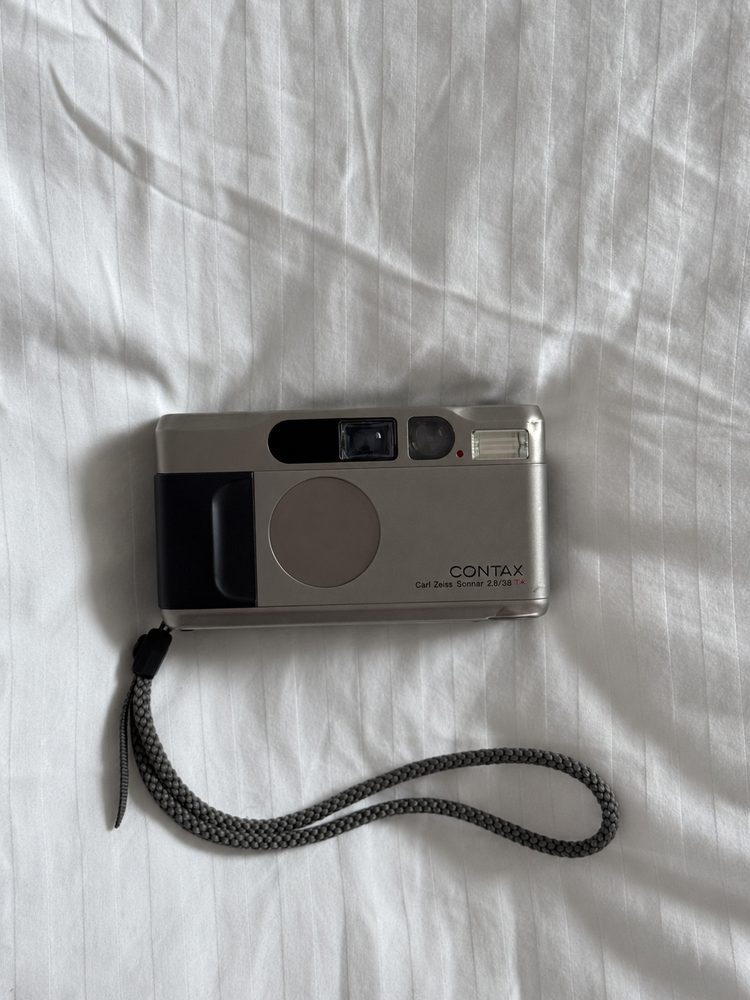
The luxury point-and-shoot. Launched around 1990, it has a titanium body and a sharp Carl Zeiss Sonnar 38mm f/2.8 lens. Photos look rich and crisp, and the camera feels lovely in your hand.
The honest part: the Contax T2 became a celebrity-and-influencer favorite, and prices rose sharply as a result. Used ones now commonly sell for well over a thousand US dollars. It's a great camera, but it's also an aging electronic device, and repairs can be difficult and expensive if it breaks. For a beginner, it's hard to justify. Pay for this one only if you know you love film and understand the risk.
Canon Sure Shot (Autoboy in Japan)
"Sure Shot" isn't one camera but a long family of Canon compacts, starting with the AF35M in 1979. Many models are affordable, reliable and easy to find. Some have zoom lenses, some have fixed lenses and some include a date stamp.
They're often the best value on this list. A clean, working Sure Shot from a decent seller is a smart first camera.
Pentax (Espio compacts and the K1000)
Pentax made a lot of compact cameras, especially the Espio zoom line, and many are still cheap because they haven't been hyped yet. On the SLR side, the Pentax K1000 is a classic, simple manual camera that photography students used for decades.
There's also a modern option: in 2024 Pentax released the Pentax 17, a brand-new half-frame film camera. Half-frame means you get roughly twice as many shots per roll, and buying new means a warranty.
Quick comparison
| Camera | Type | Best for | Watch out for |
|---|---|---|---|
| Olympus mju-II | Autofocus compact | Everyday, travel | Inflated prices, flash resets |
| Olympus XA2 | Zone-focus compact | Daylight, pockets | Close-focus guesswork |
| Olympus OM-1 | Manual SLR | Learning manual | Battery adapter, light seals |
| Contax T2 | Premium compact | Committed enthusiasts | Hype pricing, costly repairs |
| Canon Sure Shot | Autofocus compact | Best value starter | Varies by model |
| Pentax K1000 | Manual SLR | Learning manual | Heavier to carry |
| Pentax 17 | New half-frame | Warranty, reliability | Manual zone focus |
 Take a break and playAura QuizYour friends pick the pictures, the quiz finds your color.Play now →
Which film to load first
For your first roll, choose a forgiving color film with a speed of ISO 200 or 400. Higher numbers handle lower light better.
- Kodak Gold 200: warm, sunny colors and usually affordable. Lovely outdoors.
- Kodak UltraMax 400: a good all-rounder for mixed light and indoor flash.
- Kodak Portra 400: the famous one for soft, flattering skin tones. Pricier, but very forgiving.
- Ilford HP5 Plus or Kodak Tri-X: classic black-and-white films with nice grain.
- Kentmere 400: a budget black-and-white option, great for practice.
Film prices have risen a lot in recent years, so it's worth comparing shops and buying a few rolls at a time.
How to buy used without getting burned
Old cameras are machines with decades of history. A few checks save a lot of heartache.
- Buy from a seller with returns. Specialist used camera shops and reputable marketplaces often test cameras and offer a warranty. That's worth paying a bit extra for.
- Ask if it's been tested with film, not just "powers on."
- Check the battery compartment for green corrosion.
- Look through the lens with a flashlight for haze, scratches or fungus (it looks like fine spider webs).
- Open the back and look at the foam light seals. Crumbly, sticky seals let light leak onto your film. They can be replaced.
- Fire the shutter and flash a few times if you can try it in person.
- Be wary of "untested" listings at tested prices.
Then shoot one test roll right away. If something is wrong, you'll know while you can still return it.
Getting your photos developed
When the roll is finished, the camera rewinds it (or you rewind it by hand). Take it to a photo lab, either a local shop or a mail-in service.
Ask for development and scans. You'll usually receive digital files by email or download link, and you can choose a higher scan resolution if you plan to print. Many labs also return your negatives, which you should keep somewhere cool and dry.
Black-and-white film can also be developed at home with a small kit, which is a fun project once you're hooked.
Start simple, shoot a lot
The best beginner film camera is a cheap, reliable one you'll actually carry. Your first rolls will have blurry shots, finger-in-the-corner shots and one or two you love so much you'll frame them. That's the whole joy.
Film pairs well with trips: take a little camera on your first trip to Tokyo or to the Riviera, and you'll come home with photos that feel like a mood. If you'd rather stay digital for now, our phone photography tips for sunsets and the moon will level up your camera roll today.