In this article
- Before you go: the practical stuff
- Day one: Asakusa and Kuramae, old Tokyo at a gentle pace
- Day two: Harajuku, Omotesando and a park
- Day three: Yanaka, Nezu and Ueno
- Day four: Kichijoji and Inokashira Park
- If you have more time
- Etiquette that makes everything easier
- How to keep the trip cozy
- Your first trip, your pace
Tokyo has a reputation for being overwhelming: giant crossings, neon everywhere, train maps that look like a bowl of spaghetti. And yes, it can be all of that. But it's also one of the calmest big cities on earth once you slow down. Side streets go quiet, people speak softly on trains and there's a tiny shrine or a good coffee around nearly every corner.
Most first-timers make the same mistake. They try to see six neighborhoods a day, zigzag across the city on trains and end the trip more tired than when they arrived.
This itinerary does the opposite. One area per day, plenty of sitting down, and room to wander. It's built for four days, but you can stretch or shrink it easily.
Before you go: the practical stuff
A little setup makes everything smoother.
Get an IC card
An IC card is a rechargeable tap card that works on trains, subways and buses, and at konbini and many vending machines. The two big names are Suica and PASMO. Physical cards went back on general sale in 2025 after a chip shortage, and there are also tourist versions and mobile options. If you have an iPhone or certain Android phones, you can add a Suica to your phone's wallet and top it up there.
Tap in, tap out, done. No need to work out fares at a ticket machine.
Use your phone for directions
Google Maps handles Tokyo transit very well, including which exit to take. Big stations like Shinjuku have dozens of exits, and choosing the right one saves you a long underground walk.
Carry some cash
Cards work in most places now, but small restaurants, shrines and old-school shops sometimes take cash only. ATMs at 7-Eleven generally accept foreign cards.
Lean on the konbini
Convenience stores (konbini) are a genuine travel tool. You can grab breakfast, buy an umbrella when it suddenly rains, print documents, use the ATM and sometimes find a restroom. Try an egg salad sandwich, an onigiri (rice ball) and whatever seasonal drink is on the shelf.
Day one: Asakusa and Kuramae, old Tokyo at a gentle pace
Start somewhere with an easy story. Asakusa is home to Senso-ji, Tokyo's oldest temple, reached through the big red Kaminarimon gate and the snack-lined Nakamise shopping street. Go early in the morning if you can. The street is quieter and the light on the temple is beautiful.
After that, walk south along the Sumida River. You'll see the Tokyo Skytree across the water.
Then drift to Kuramae, a low-key neighborhood a short walk away with small design shops, stationery stores and quiet cafes. It's a lovely place to slow down after the temple crowds.
Cozy moment: sit by the river with a coffee and a pastry and watch the boats go by.
Day two: Harajuku, Omotesando and a park
This day mixes Tokyo's energy with green space.
Start at Meiji Jingu, a Shinto shrine set in a large forest right next to Harajuku Station. The wide gravel paths under tall trees feel miles away from the city. At the shrine you can write a wish on a wooden plaque called an ema.
Next door is Yoyogi Park, perfect for a picnic of konbini snacks on a sunny day.
Then dip into Takeshita Street in Harajuku if you want the colorful, crowded, crepe-eating side of Tokyo. When it gets too much, walk to Omotesando, a wide tree-lined avenue with striking architecture, and wander its quieter back streets (people call this area "Ura-Harajuku") for small boutiques and cafes.
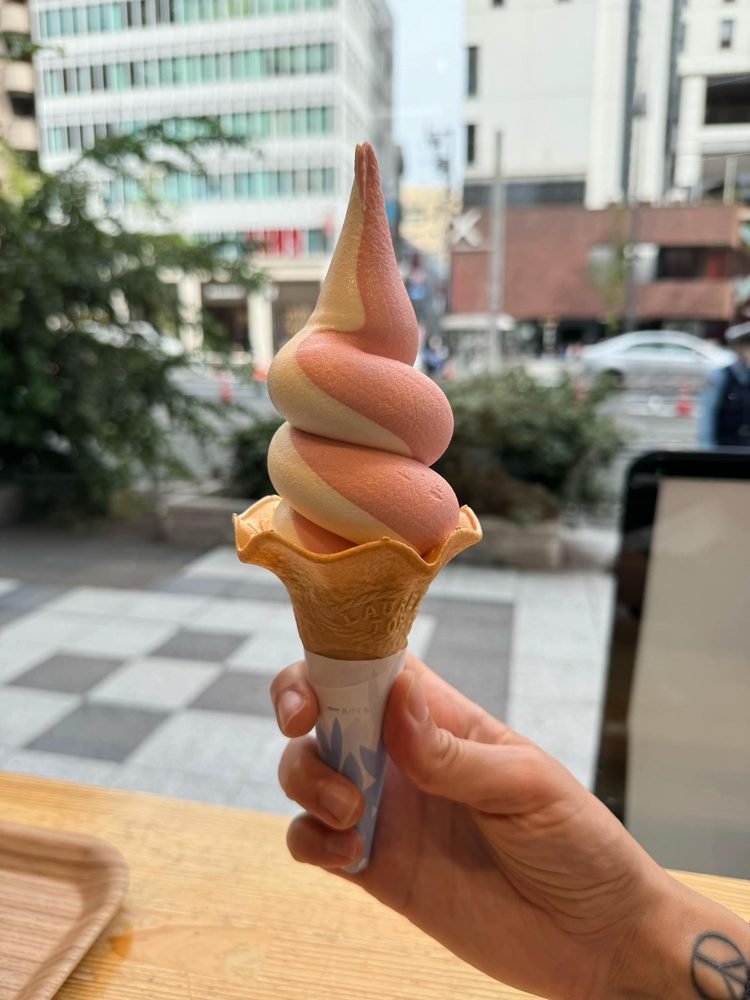
Want the famous Shibuya Crossing? It's one stop away. Watch it from above in a cafe window, cross once for the photo and you've done it.
Day three: Yanaka, Nezu and Ueno
This is our favorite day for people who want a slower, more local feel.
Yanaka is one of the few areas of Tokyo that kept much of its older character. Walk down Yanaka Ginza, a small shopping street with snack stalls and craft shops, and look for the cat decorations hidden around the neighborhood. The large Yanaka Cemetery is peaceful and green, and locals use it as a walking route.
Nearby, Nezu Shrine has a tunnel of small red torii gates, a quieter cousin of the famous ones in Kyoto.
Finish in Ueno Park, which has museums, a pond full of lotus leaves (Shinobazu Pond) and street food. If you love museums, the Tokyo National Museum is here too.
 Take a break and playAura QuizYour friends pick the pictures, the quiz finds your color.Play now →
Day four: Kichijoji and Inokashira Park
Kichijoji sits to the west of central Tokyo and often appears on lists of places locals would like to live. It's easy to see why.
Inokashira Park has a pond where you can rent rowboats or swan pedal boats, plus wooded paths and street performers on weekends. The surrounding streets are full of bakeries, vintage shops and cafes.
If you're a Studio Ghibli fan, the Ghibli Museum is in Mitaka, at the edge of the park. Tickets are sold in advance only, by date and entry time, and they go quickly. Plan this one before your trip.
If you have more time
- Shimokitazawa: vintage clothing, record shops and small live music venues.
- Nakameguro: a canal lined with cherry trees, gorgeous in spring and calm the rest of the year.
- Kiyosumi-Shirakawa: a traditional garden and several well-regarded coffee roasters.
- Shinjuku Gyoen: a large garden that is wonderful for a slow afternoon.
Etiquette that makes everything easier
Japan doesn't expect visitors to be perfect, but a few habits go a long way.
- Keep your voice down on trains and don't take phone calls on board.
- Stand on the left on escalators in Tokyo, leaving the right side for people walking. (Osaka is the opposite, just to keep you on your toes.)
- Carry your trash. Public bins are rare. Konbini usually have bins for things bought there.
- No tipping. It isn't expected, and it can cause confusion.
- Take your shoes off where you see a raised floor or a row of slippers.
- Don't eat while walking on busy streets. Finish your snack near the shop where you bought it.
- Queue neatly for trains. Lines are marked on the platform.
How to keep the trip cozy
Plan one "anchor" per day and let everything else be optional. Build in a rest stop every afternoon: a cafe, a park bench, a bath back at the hotel. Avoid trains during morning rush hour (roughly 7:30 to 9:30 on weekdays), especially with luggage.
Speaking of luggage, many hotels can arrange luggage forwarding (takkyubin) to your next hotel or the airport, so you can travel with just a daypack. Coin lockers at stations help on travel days too.
And sleep. Jet lag hits harder when you're walking 25,000 steps a day.
Your first trip, your pace
You don't have to see everything. Tokyo rewards people who sit still for a while: the sound of a temple bell, a perfectly made coffee, the way a quiet street suddenly opens onto a shrine. Leave room for that, and you'll want to come back.
When you start planning what to bring home, our guide to what to buy in Japan covers the best souvenirs and how tax-free shopping works now. And if you want photos that do the city lights justice, read our tips on sunset and moon photos with your phone.