In this article
Here's a secret about icebreakers: the people who dread them most are often the ones who benefit most. If you're shy, anxious or just not great at small talk, a roomful of near-strangers can feel like a pop quiz you didn't study for. What do you say? When do you jump in? How long is too long to talk about your cat?
A good game removes most of those questions. It tells you when to speak, what to talk about and when to stop. Instead of inventing conversation from nothing, you're just playing your turn. And when the game ends, you suddenly have things to talk about: that ridiculous answer, the round you almost won, the person who can't keep a straight face.
This guide is about icebreakers that feel like games rather than performances. No standing up to give a speech about your "fun fact." Just low-pressure ways to get people laughing.
Why structure helps shy people
Small talk is hard because it's open-ended. There are no rules, so every pause feels like your fault.
Games flip that. The rules carry the conversation, so silence stops feeling awkward. Everyone has a role, so nobody has to fight for airtime. And attention lands on the game itself (the clue, the question, the mystery) rather than on you as a person.
There's another bonus. Laughing together builds a sense of connection quickly, even between people who just met. You don't need a deep conversation to feel closer to someone. Sometimes you just need to both lose at the same silly game.
If you're curious about why some people find groups draining in the first place, our guide to introverts, extroverts and ambiverts is a good read.
What makes an icebreaker awkward-friendly
Before the list, here's what we looked for:
- Short turns. Nobody holds the spotlight for long.
- Clear prompts. You never have to come up with a topic from scratch.
- Low stakes. Wrong answers are funny, not embarrassing.
- Easy to pass. Anyone can skip a turn without drama.
- No forced oversharing. Personal stuff is optional, never required.
The games
This or That
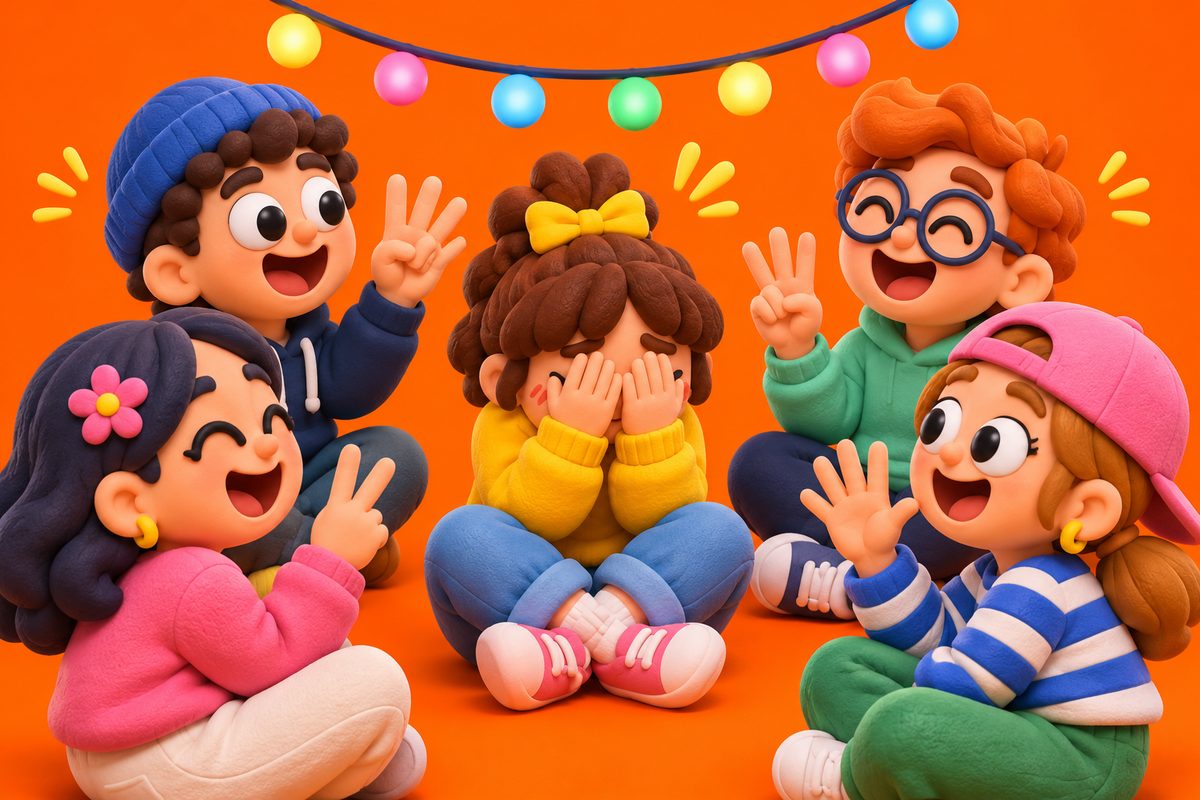
Someone asks two-option questions: beach or mountains, cats or dogs, early bird or night owl, pizza or tacos. Everyone answers quickly, ideally all at once by pointing or holding up fingers.
It's the gentlest possible start. Answers take one word, nobody's on the spot and you instantly find little things in common.
Would You Rather
A step up from This or That, with sillier dilemmas. "Would you rather always have to sing instead of talk, or dance everywhere you walk?" The fun is in the reasoning, but a one-line answer is completely fine.
We have a big list of would you rather questions sorted by mood if you need inspiration.
Two Truths and a Lie
Each person shares three short statements about themselves, and the group guesses which is false. It sounds personal, but you control exactly how much you share. "I've never seen Star Wars" counts. So does "I once ate a whole cake by accident."
The guessing is the fun part, and it sparks easy follow-up questions. Stuck for ideas? Here are two truths and a lie ideas you can borrow.
Categories
Pick a category (fruits, Disney characters, things in a kitchen) and go around the circle naming one each. If you repeat one or freeze, you're out. It's fast, rhythmic and doesn't involve talking about yourself at all.
One-Word Story
The group tells a story together, one word per person. It goes off the rails almost immediately, which is exactly the point. Shy players love this because a single word is all you ever need to say.
Who Am I?
Each player gets a famous name stuck to their forehead (or held up on a phone screen) and asks yes-or-no questions to figure out who they are. Everyone is helping everyone, and the questions get funnier as people get desperate.
Twenty Questions
One person thinks of an object, animal or person. Everyone else gets twenty yes-or-no questions to guess it. Calm, clever and great for small groups or quiet corners of a party.
Fortunately, Unfortunately
One person starts a story with "Fortunately..." and the next continues with "Unfortunately...", alternating around the circle. "Fortunately, I found a puppy. Unfortunately, it was a dragon." Very silly, very low pressure.
Rose, Bud, Thorn
Good for groups that will see each other again, like a new class or team. Each person shares a highlight (rose), something they're looking forward to (bud) and a small challenge (thorn). Keep it light. "My thorn is that the coffee machine hates me" is a perfect answer.
Social deduction games
Games where one hidden player is bluffing are brilliant for awkward people, oddly enough. Everyone is trying to act natural at the same time, so nobody stands out for being nervous. In Imposter, most players see the same secret word while one player doesn't and has to blend in by giving vague clues. Suspicion, laughter and accusations follow, all with very simple rules.
Charades
Acting things out sounds like the opposite of shy-friendly, but charades works because the focus is on guessing, not performing. Play in teams so nobody is alone, and allow quick passes. A phone app like our Charades game handles the word picking and the timer, so nobody has to invent clues on the spot.
 Take a break and playImposterEveryone knows the word. Except one of you.Play now →
How to choose the right one
| Situation | Try |
|---|---|
| Total strangers, first five minutes | This or That, Categories |
| Small group around a table | Twenty Questions, Two Truths and a Lie |
| Party with lots of energy | Charades, Imposter |
| Group you'll see every week | Rose, Bud, Thorn |
| Online video call | Would You Rather, Two Truths and a Lie |
Start with the lowest-pressure game and build up. Something fast and simple first, something more playful once people are smiling.
Tips if you're the awkward one
- Volunteer early. Going first in an easy round is less scary than waiting and dreading your turn.
- Prepare one or two answers in your head before the event. A safe "two truths and a lie" set can save you.
- Ask a follow-up question. "Wait, how did you accidentally eat a cake?" is the easiest conversation starter in the world.
- Laugh at yourself. Freezing on "name a vegetable" happens to everyone.
- Take breaks. Stepping out to refill your drink is allowed.
Tips if you're hosting
- Explain rules in one sentence and start playing. People learn faster by doing.
- Make passing normal. Say "you can skip anytime" out loud at the start.
- Keep rounds short and stop while people are still having fun.
- Never force personal questions. Let deep conversations happen on their own.
Our guide to hosting a stress-free game night covers more on reading the room.
The ice usually melts faster than you think
Most people at a party are a little nervous, even the loud ones. A good game gives everyone a shared starting point, and after a round or two, conversation starts to happen on its own. You don't have to be charming. You just have to play.